
The microphone stood between them like a steel flower. Zang adjusted the gain, watched the levels dance green across her laptop screen. Outside, Agban dozed in the afternoon heat, chickens scratching at red dust, children’s voices carrying from the primary school down the hill.
“We can start whenever you’re ready, Mr. Katung.”
Atyoli Katung sat on a three-legged plastic chair balanced perfectly on a flat stone. One eye was clouded, the cataract like a crushed moon. He chewed a gwaza stem, working it between his back teeth. When he spat, the saliva came out dark.
Zang had interviewed forty-three Tyap speakers in six weeks. Farmers, mostly. Grandmothers who sold groundnuts. A retired teacher who’d fought in Biafra and refused to speak about it. Most spoke the “market dialect,” the version softened by Hausa and English, streamlined for buying yams and settling bride prices.
Katung was different.
The linguistics department at Ahmadu Bello had given her his name on a scrap of paper, no phone number. “He knows the deep register,” they’d said. When she’d found his compound, three mud-brick structures arranged around a courtyard where guinea fowl pecked at spilled millet, he’d been waiting.
“You said you wanted the Defense Lexicon.” His voice scraped, a stick dragged across corrugated iron.
“Yes. For the archive. The University of Zurich is building a comprehensive–”
“I know what an archive is, Dr. Nkom.” He pronounced her name correctly, the tonal fall on the second syllable that marked it as belonging to the Nkom clan. “A grave for voices.”
She felt her jaw tighten. “Languages die when they’re not preserved. When there’s no record–”
“They die when people like you record them.” He shifted in the chair. The soundproofing foam stapled to the mud-brick walls caught the gesture, dampened it. “My grandmother spoke these words to her grandmother. Mouth to ear. You want to put them in a box in Switzerland.”
Zang’s hand moved to her laptop, fingers finding the escape key but not pressing it. She thought of her own grandmother. Lagos, 2003. The old woman had called her name from the hospital bed, but Zang had been in the hallway, texting. When she finally entered the room, her grandmother was gone. The nurses said she’d been calling out. Zang. Zang. But with a tonal pattern Zang didn’t recognize. A meaning Zang would never know.
“Just the words,” Zang said quietly. “I just need the words.”
Katung smiled, showing yellow teeth worn flat. “Then you’ll have them.”
He cleared his throat. The sound was long, deliberate, something being dredged from deep water. Zang’s finger hovered over the record button.
When he spoke, the room changed pressure.
“Gwagwa.”
It was geology moving. A tectonic grinding that started in his chest and tore through his larynx. The microphone needle spiked into the red. Zang’s headphones shrieked, a feedback loop that felt like hot wire threaded through her ear canal.
She ripped them off. Her right ear felt wet.
“The levels…” She touched her ear. Her fingers came away red. “We need to adjust the…”
“You swallowed it.”
“What?”
Katung rose from the chair. He seemed taller than before, or maybe she’d shrunk. “The seed. It’s in your throat now. You asked for the Defense Lexicon. Congratulations, Dr. Nkom. You’re defending.”
The room tilted. Zang grabbed her equipment, shoving the laptop into her bag. The microphone clattered to the floor. She needed air… to call someone. She needed–
The word sat in her throat like a stone she’d tried to swallow whole.
___________________________
The hotel in Kafanchan had a name she couldn’t remember anymore. The generator hummed through the walls, a mechanical heartbeat that made her teeth ache. Zang sat on the edge of the bed with her laptop open, trying to transcribe.
She’d made it back. Two hours in the car, the AC broken, sweat turning her grey pantsuit into a second skin. Now, in the room, the fever was climbing. She typed:
Subject: Field Recording #44 – Deep Tyap Lexicon
Phonetic transcription follows—
Her right index finger wouldn’t bend. She looked down. The nail was splitting lengthwise, a dark line running from cuticle to tip. She tried to flex it. Pain, a deep grinding ache like something being built inside her bones shot up her arm.
The nail peeled back like a scab. Underneath, something grey and sharp pushed through. Too hard for bone. Flint. The same material the Nok people had used for arrowheads.
She grabbed her phone with her left hand. Her right was already useless, the fingers beginning to curl inward as the transformation worked its way down to the second knuckle. She managed to open the browser, type with her thumb: fingernails turning to stone symptoms
The search returned nothing useful. Calcium deposits. Fungal infections. She tried again: Tyap language curse
Folktales. Tourism sites.
There was nothing about words that grew rocks under your skin.
The laptop screen swam. She blinked, and the colors shifted. The room’s whites turned violet, ultraviolet. She could see the heat signature of the cockroach behind the dresser, the structural weakness in the door frame where the wood had rotted.
Her phone buzzed. A text from her department head: Zurich asking for the upload. Status?
She tried to type: Technical difficulties. Need more time.
What came out: Stone grows. Wait.
She stared at the screen. Deleted it. Tried again: Delay. File corrupted.
Her thumb hit send before she could check it. The English felt wrong in her mouth, aluminum foil against a filling.
She walked to the bathroom and the mirror showed a stranger.
Her jaw had widened, the bone structure more pronounced. Her teeth, she opened her mouth, her teeth were no longer even. The molars had sharpened, serrated edges catching the fluorescent light. When she ran her tongue along them, the taste was mineral. Iron and clay.
The skin on her neck was flaking. She peeled a strip. Underneath, the flesh was grey, rough. She scratched at it. Red dust fell into the sink.
Laterite.
The word came to her in Tyap first, then English. The soil of Kaduna, earth that turned roads into wounds during the rainy season.
She tried to say her own name. “Zang.”
The mirror cracked.
The sound that came from her throat was a frequency, a vibration that found the glass’s resonant point and shattered it. Shards fell into the sink, tinkling like wind chimes.
She backed away. Her heel hit the bed frame and she sat down hard. The mattress springs groaned under a weight that shouldn’t be hers.
Sleep came like a landslide.
___________________________
The dream was memory, not hers.
1992. Zangon Kataf. She was the land, stretched across the valley, patient and old. She felt the boots first, hundreds of them, running, soldiers and civilians, the difference meaningless. They churned her soil to mud, burned the tires, and the smoke choked her pores. The rubber melted into her topsoil, poisoning the cassava roots.
The blood soaked into her aquifers, turning the water table rust-red. Iron-rich. Its taste travelling through her underground rivers, metallic and warm. The bodies were heavy and still, becoming part of her composition, flesh to soil, bone to stone. Protein chains breaking down into nitrogen and phosphorus.
The land remembered and prepared its response.
Somewhere deep in her granite core, instructions were being written. Coded into the phonetic structure of words that predated the British, Hausa jihads, even the collapse of Nok. Words that were of biological imperative: If we are attacked, become the weapon. If we are silenced, become the wall.
When she woke, the hotel room was dark. The generator had stopped. Outside, Kafanchan breathed in pre-dawn humidity. Zang’s body felt heavy and rooted.
She looked at her hands in the grey light. The flint had consumed her fingers entirely, her palms were plated in laterite and granite scales. When she flexed, the joints ground like pestle against mortar.
She tried to think in English. The grammar dissolved. Subject-verb-object became weight-pressure-break. She reached for her laptop, but her hands were too crude. The keys shattered under her touch.
A sound outside the door. Footsteps. Human gait, the soft pad of rubber soles on concrete.
She could hear his heartbeat through the wall. 152 beats per minute. Elevated and nervous. The blood moving through his carotid artery made a sound like water through limestone, eroding the bedrock one century at a time.
The door rattled. “Madam? Checkout was yesterday.”
His voice hit her like static. Too much air pushed through inadequate vocal cords, the sound waves chaotic and unstructured. Wasted breath.
She opened her mouth to answer in English. I’m sorry. I’ll leave. The words were there, somewhere in the collapsing architecture of her frontal lobe.
What came out: “Gggg—”
The first syllable of Gwagwa. Just the initial consonant, the velar stop that required her tongue to hit the soft palate.
The wall cracked.
A hairline fracture appeared in the concrete, starting at floor level and racing upward toward the ceiling. The crack forked and branched. Became a tributary system like the dry riverbeds near Kagoro.
She clamped her mouth shut. Bit down hard. Her serrated teeth cut through her lower lip. Red clay came out, thick and wet, the consistency of fresh laterite.
The footsteps retreated. Fast. Running.
Looking at the cracked wall, recognition passed through.
She was resonance. The land had tuned her frequency to match its own structural integrity. When she spoke, geology answered.
Hills would rise when she called. The earth would split open if she screamed.
This was liability, a fault line learning to walk.
The window broke easily under her fist. Glass exploded outward in a shower of fragments that caught the streetlight. She dropped three stories, the impact cracking the pavement but not her legs. She landed heavy and barefoot, wearing only the torn remnants of her pantsuit.
She needed to go back. The pull was magnetic, cellular. Agban.
The hills. Where the stone slept and dreamed.
She ran.
___________________________
The Kagoro Hills rose from the plain like broken teeth. Zang moved through the scrubland, her feet finding easy purchase on rock that would’ve shredded human skin. She could hear the Matsirga Waterfalls from here, five kilometers away, smell the burukutu brewing in Kafanchan behind her, the sweet-sour fermentation of sorghum.
Dawn broke violet and gold. The landscape glowed in ultraviolet, she saw the mineral veins in the granite and fault lines, places where the earth was young and still soft.
Agban appeared as the sun crested the horizon. The village was waking. Smoke emerging from cooking fires. A radio playing gospel music somewhere in the distance.
Atyoli Katung sat on his plastic chair in the same position. Waiting.
He didn’t look up when she approached, she was seven feet tall now, armored in geological plates that clicked with each step, her hair had become fibrous roots, stiff and black.
“You came back,” he said.
Her voice ground out like millstones. “You. Did. This.”
Katung finally looked up. His good eye tracked her face, the ridge of granite across her brow, the obsidian sharpness of her cheekbones, the other eye, clouded and useless, wept a single tear. The body’s autonomic response to standing in the presence of something geologically significant.
He was quiet for a long time. When he finally spoke, his voice was smaller than before. Older.
“Yes.”
“Why?”
“You wanted to put my voice in a box.” He spat the gwaza pulp into the red dust. It landed with a wet sound. “So I put my voice in you. Now you’ll carry it until the rocks wear down to sand. Until the Kagoro Hills are flat as Lagos. Until there’s nothing left to defend.”
She could crush him. Her hands, now articulated stone could pulverize his skull with the same ease she’d shattered her laptop keys. Snap him like a dry twig, like the gwaza stem between his teeth.
But the anger was already cooling, hardening into something denser, closer to understanding.
Her eyes travelled to his throat. For the first time, she saw the scars. Lateral lines across his larynx, pale against his dark skin. The tissue was thickened, keloided, the throat of a man who’d spent decades speaking words that human vocal cords were never meant to form.
“The Archive?” The word barely fit in her mouth anymore.
Katung gestured at the hills. “You’re standing in it.”
She turned. The rock face loomed behind her, ancient and scarred. She could see the clefts now, the places where the stone had split to make room. Twenty. Thirty. More. Each one the width of a human body.
It didn’t feel empty.
She walked closer. In the nearest cleft, something grey and still waited. Humanoid but not human anymore. The face was smooth, eroded by wind and time, the features gone. But the mouth was open, frozen mid-word in the act of speaking.
“The other speakers,” she said.
“The real archive.” Katung’s voice held exhaustion. “The ones who knew what they were protecting. The ones who chose to become the land rather than let it be taken.”
Every fluent speaker of Deep Tyap had made this choice. Speak the words and accept the transformation, to become the guardian, the weapon, the wall.
But they had chosen it.
She hadn’t.
“I didn’t know-”
“You never asked.” He stood, joints popping. “You came to take. I gave you what you deserved.”
The sun climbed higher, the violet glow fading to ordinary light. Zang looked down at her flint fingers, the laterite palms. She tried to feel regret… human.
The pull toward the hills was stronger now. Biological. Inevitable.
She walked past Katung. Her feet left impressions in the ground, each step a small crater. Found the cleft that called to her, a vertical split in the granite, narrow and deep. Shadow pooled at the bottom like black water.
She pressed her back against it. The stone was cool. Older than the concept of mercy and language itself.
Older than the first human throat that tried to shape sound into meaning.
She pushed.
The rock scraped her shoulders, grinding away the top layer of laterite scales. A hideous sound, granite against granite. Too tight. She forced herself deeper, hips catching on the narrowing walls. Skin tore, dust, red and fine as pollen. It drifted down around her feet, settling in the cracks.
Granite closed around her ribs, chest compressed. Inhaled, and the breath didn’t go anywhere. Lungs were already solidifying, alveoli calcifying into stone chambers that would never hold air again.
Tried to pull back. Couldn’t. The stone held, patient and absolute. The cleft had accepted her offering.
Panic flared, hot and mammalian. Opened her mouth to scream.
Jaw was locked, fused to the stone behind her head. The rock had grown into the space between her molars, welding them shut. Arms were pinned at her sides, immobile. The darkness was total.
The stone continued closing. Felt it creep across her face, a mineral tide. Covered her eyes first, the violet-seeing eyes that could track heat and fault lines. Then her nose… Then her forehead.
Help me. Tried to think it in English, but the grammar was gone. Syntax had dissolved. Subject and verb and object had become just weight and pressure and the slow, geological time that turns bones into fossils and rage into coal.
The stone closed over her face like a hand over a mouth, silencing the last witness.
Couldn’t breathe, didn’t need to. Lungs had become pockets of compressed air, slowly fossilizing into chambers that would hold nothing but minerals. Heart, if it still beat, beat so slowly that the intervals between beats could be measured in seasons.
Tried to count the seconds. Lost track. Tried to remember her grandmother’s face. The Lagos apartment, smell of pepper soup, pitch of her voice singing old songs.
What remained: Low hum of the earth’s iron core, spinning far below. Patient drift of continents. Memory of boots running over stone during a crisis thirty years dead, and the crisis before that, stretching back through Lugard and the Sokoto Caliphate and ancient kingdoms that left only pottery shards and ghost stories.
And the word. Still alive in her throat, waiting. Coiled in her fused vocal cords like a seed in drought, ready to germinate the moment the next threat arrives.
Gwagwa.
Thunder. The thunder of tectonic plates grinding against each other.
Thunder of the land refusing to forget. Refusing to be quiet and archived.
Somewhere above, Atyoli Katung sat on his plastic chair and waited. His scarred throat hurt. It always hurt after speaking the word. In a month, maybe two, another linguist would arrive. Young and educated.
Eager… Armed with grants and recording equipment.
They would ask for the deep register, always did.
And he would give it to them.
The hills needed teeth.
And the world was never short of people with open mouths, ready to swallow.
About the Author
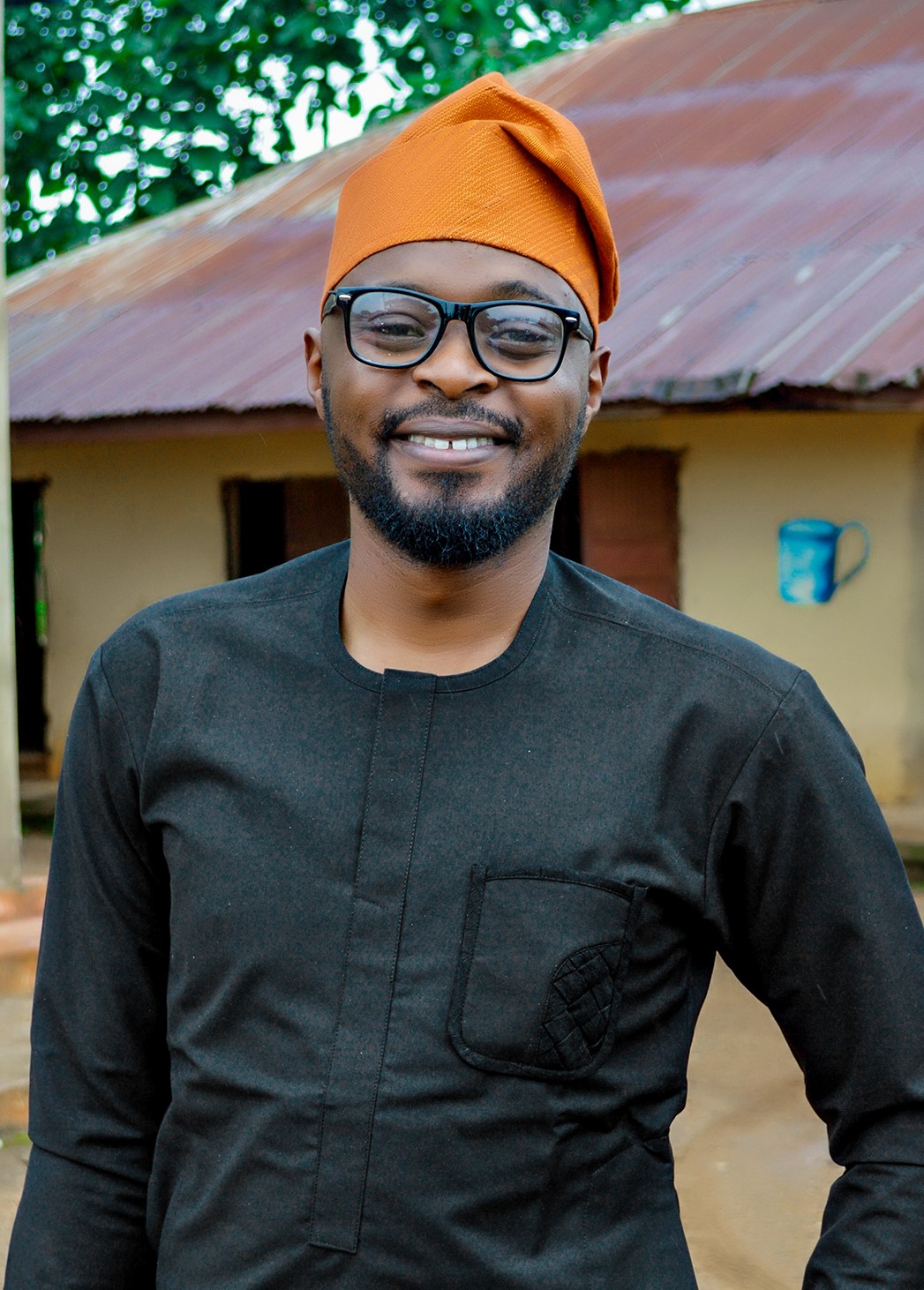 Samuel Kozah is a pharmacist and writer based in Kaduna, Nigeria. His fiction is rooted in the landscapes and communities of northern Nigeria. His work has appeared in Brittle Paper and Horrific Scribes with upcoming works in Amethyst Review, Neither Fish Nor Foul, and Night Shades Magazine.