
You’re in your garden again. The brick walls encase you. They’re too tall to see over—even for you—and you’re quite tall. They conceal you completely from the rest of the world. You’ve made sure of it. It was one of the reasons you moved into this townhouse in the first place.
It’s in a quiet neighborhood, on a quiet street. Every brick house looks the same, save maybe for the shade of gray on the front door. The yards are lined back-to-back, with windows mirroring each other above them. Ivy grows on the back wall of your house, where a screen door lets out into the garden. It was once kept neatly pruned but now it gets closer to overtaking the facade with each passing day. You’ve stopped trying to fight it. Now you tend to it just enough to ensure it doesn’t cover the door or grab one of your plants.
Your garden is full of plants. Bursting with them. Overflowing. All the same type, though some are larger than others. They have vibrant, sturdy fronds like a bird of paradise, but you could never compare them to such an ordinary, superficial species. Their leaves reflect bright enough to hurt your eyes when the light hits them in the right way. They’re almost too green. Some are darker, some are lighter, but they’re all impeccable. Each one represents someone you care about.
You stand in the center of your garden admiring them. You come out here every day and check on them. Usually around 5:15pm when you get home from work. Sometimes you come back after dinner—around 8pm. You’ve been doing this more often lately. Sometimes you check on them before you go to work—7:30am.
While you’re out here, you tend to them. You check the soil to make sure they’re getting enough water. You make sure their leaves are free of spots and bugs and rot. You’re one of the few people who keeps your plants outside—maybe the only one. Everyone has plants like this—physical manifestations of the relationships that they cultivate with those in their lives. They can be seen in windows as you walk down the street. Most people keep them inside in pots, tending to them in the careful climate of their homes. You’ve tried this. It was suffocating.
Now they’re kept outside. Where you can pick and choose when to interact with them.
You check each of the plants in turn when you come out here. Except for one. The one in the corner. It’s grown almost as tall as you now. You avoid it as much as you can, but it’s impossible not to catch glimpses of it out of the corner of your eye.
You focus on the smaller ones. You spritz their leaves with water and wipe away flecks of dust. You make sure the soil is damp—not too damp.
They’re pristine. You love them.
#
You come home in a rush one day, later than usual—7pm. Your cheeks are flushed. Something must have happened at work. Maybe you had someone fall through. Maybe it was something in your personal life. A friend pushed you away. A vein bulges like a worm has burrowed under your skin and left a tunnel from your temple to your neck. The screen door slams shut behind you as you barge into the garden. It shakes with the sound of a rattlesnake about to strike. You head straight for one of the smaller plants, one that held a coveted place in the center of the bed. It was a friend, then. It has a hole with yellow edges in one of its leaves.
You run your finger down the damaged leaf, caressing it. Something passes through your eyes. Disappointment? Pity? You snap the leaf off at the base of the stem. Bright red liquid beads on the stalk where the frond once connected. You dab it away and it stains your fingers. You suck them clean. It leaves a blush on your full bottom lip.
Perfect.
No, not quite perfect yet. There’s a bruise on another leaf. You snap that one off too.
The plant doesn’t have many leaves as is. It looks horribly lopsided now. You rip a frond off the side opposite the original damage. It’s still not quite right. You take off another. And another. Red oozes down the stalk. Still not good enough.
A wild light enters your sea-glass eyes as they dart over the greenery, suddenly seeing all the blemishes that went unnoticed for so long. How did you not see them before now? They’re hideous. Every frond is wilting and crinkled, every stem rotten. None of them are enough for you. They never will be. How was it possible that you had been so blind? Your garden has been festering this whole time. It’s disgusting. Unforgivable.
You strip the plant completely.
You step back to look at your work. There’s only a stub of the central stalk left, raw at the edges and dwindling of color.
It’s lovely.
#
The days pass quickly. You seek refuge in your garden more and more often. It’s becoming a habit. You stay out here longer. You get up earlier to spend an extra few minutes in your sanctuary. You stay up hours later. You stay out here long after the sun has set, and the world is reduced to dark silhouettes.
You’ve pruned a few more of your small plants. Done to them what you did to the previous one. Everywhere you rip a leaf off it leaves a rusty scar on the stem. Why weren’t you doing this sooner? They look beautiful this way. Beaten back to their barest forms.
#
One day you come home with tears streaming down your face. Another bad day at work? A falling out with another friend? Or is it something closer to home? Your cheeks are red and mottled. There are wet spots on your cotton shirt where teardrops landed. You sit in the center of your garden, not caring that the grass rubs bright green stains onto your nice slacks. You stare at one of the plants that resides against the wall of the house. You stare at it for a long time, tears unceasing.
Then, you unwind the hose from its spot in the corner, turn the faucet, and hold the nozzle at the base of the plant.
You stay there for over an hour.
At first the plant eagerly soaks up all the water you’re giving it. You haven’t been as diligent about watering your garden. It’s been a few days at least. But before long the water starts pooling where the stem dips beneath the earth. It starts running away from the plant, spilling out into the rest of the bed, and then when those plants can no longer drink their fill, it overflows into the garden. Your pants become soaked with gritty water, covered with mud. They stick to you and squelch when you move. The chill of evening is setting in, and gooseflesh covers your arms.
You take the hose from the bed and lay on your back in the wet grass. The world is nothing but colorless shapes and heightened sensations now. You hold the stream of water directly above you. It ripples down onto your face.
Water overtakes you. Hopefully, it cools the heat in your eyes and cheeks as it carries away your tears. But it probably gets in your eyes and nose and mouth. It runs down your throat. It makes your sinuses ache like acid has been poured up your nostrils. You don’t sputter. Whatever pain you’re feeling now with water teasing your life away must be nothing compared to the agony going on inside you. You’re able to withstand so much.
After a while, you turn the hose off and go inside.
#
You go out to your garden first thing the next morning. Your short hair is mussed with sleep and swoops up on one side. You went to sleep with it wet. Hopefully you took a hot shower after the events of last night. You risk catching a cold otherwise. You’re wearing old sweatpants and a white undershirt. You assess the damage. All the plants in the bed you attended to last night have wilted completely. The drooping leaves flop in the still wet dirt and have taken on a gray hue. Aren’t they nice this way? So frail and submissive. The garden is finally starting to come together.
You make a slow circle. You admire the scars you’ve left, the vibrance you’ve taken, the fights you’ve won.
Your eyes skim over the tall plant in the corner, trying not to see it, but you feel its presence pressing in on you—that of a lover, a parent, a friend—it doesn’t matter. It still stands tall, strong, and insultingly alive. You turn your back on it and go to the opposite corner. You focus on the snapped shoots just in front of your feet. The tinge of red in the soil. The desperation with which these specimens reach for the light. Pitiful.
You brace yourself with one hand against the wall and let your sweatpants fall to your knees. Your brows furrow as your lips part, searching for a counterpart. You touch yourself. When you’re done, you spit on the leaves below you for good measure.
#
You don’t enter your garden the next day. Or the next. You’re missed, not by those who hold a place in your garden—they don’t care about you. But you’re missed by someone. All that can be seen of you is the shadow moving behind the curtains of your bedroom window. The front door clicks with your coming and going. But still, you do not return to the garden.
The ivy reaches for the door without you to beat it back, encroaching upon the hinges and the handle. A few of the smaller plants that were left too close to the wall of the house get enveloped into its mass. The feelers reach for them, choke the life out of them like lovers in bed. Then they vanish all together.
The overwatered plants don’t recover in your absence. Instead, the wilted leaves crisp at the edges, turning from bog green to dust brown.
The plants you ripped apart what feels like so long ago now have stopped their efforts at regrowing. Life drains from their stumps by the day.
Only the large plant in the corner stands strong. If anything, its fronds have gotten broader, its stalk thicker, its color glossier. It no longer has competition. It thrives. Unable to really see you, it’s impossible to know how you feel about this or to know what’s causing this growth. But you’ll understand soon enough, even this holdout will give up eventually. It will never be good enough for you. But don’t worry. You have other options, even if you don’t see them yet.
#
Eventually, you return. No matter how much you might try to stay away, you can’t help but be drawn back in. You enter the garden in a huff and survey your domain. You seem satisfied, until you spot the plant in the corner—the last specimen still holding onto life.
It’s radiant.
All the blood in your body rushes toward your face, twisting it into something devilish. Brow furrowed, you stalk toward the plant. You grasp its stem in your large hands. Your white knuckles bulge and highlight your thick fingers. Strain ripples down your spine as you heave the plant from the ground. Dirt sprays. Leaves shake. The world resettles.
You hold the plant up at the base of its stem.
A human heart—roughly the size of your fist—pulses where the roots would be if this were any other species.
You snap the stem and toss the rest of the plant aside. The heart spasms. The stem once connected to the aortas—red flesh fading into green fibers—but now blood leaks from the wound. You hold it to your eye level as you brush the dirt from its surface. It pulses madly in your palms. You curl your fingers around it and crush it. Blood seeps from it, running over your hands, down your arms in thin streams, like your veins have been pulled to the surface of your skin.
Its pulsing ceases.
You kiss it.
You drop it onto the soil at your feet. Its color leaks into the earth around it, leaving it gray and empty. It joins its fallen brethren—ashen and still, just below the topsoil. The blood it left behind on your skin starts to dry and becomes one with you. Your hands may never be clean again, but it doesn’t matter when they’re such a pretty color.
Finally at peace, you spread your arms wide with a sigh. You are the image of the crucifixion etched upon the earth. The martyr.
You’re beautiful.
#
I’m watching you again—just as I have every day since you moved your plants outside. You’re lying in the dirt, sprawled atop the graves of past hurts. The uprooted heart lays to your left. So many people have hurt you. Lied to you. Betrayed you. You’ve been through so much. But it’s okay. You’re going to be okay. Because I’m always going to be here for you.
I thank the forces that guide this universe every day that you moved in when you did. I was getting so bored, so lonely. There’s a pile in the corner of my room, just like your garden—remnants of past loves that I never bothered to fully dispose of. They’re starting to decay now. But don’t worry, you’ll never join them. I know what love is now that I see you.
You’re me. I understand what you’re going through, the losses you’ve been dealt. I know that these past few weeks have been rough, but now that you’ve seen the truth, soon you’ll see that I’m the only one that could ever be enough for you.
My own plant is to my left, always in this window, looking over you when I cannot. Suspended in a large glass jar so I can watch its heart grow, its leaves are as lush as always. It’s the only plant I have. It’s the only one I need. It’s growing so well now. You don’t even know it’s here. You never look up. Please look up. Please. I think you’re finally ready to see it. It’s finally time for us to meet.
Sincerely,
_________
About the Author
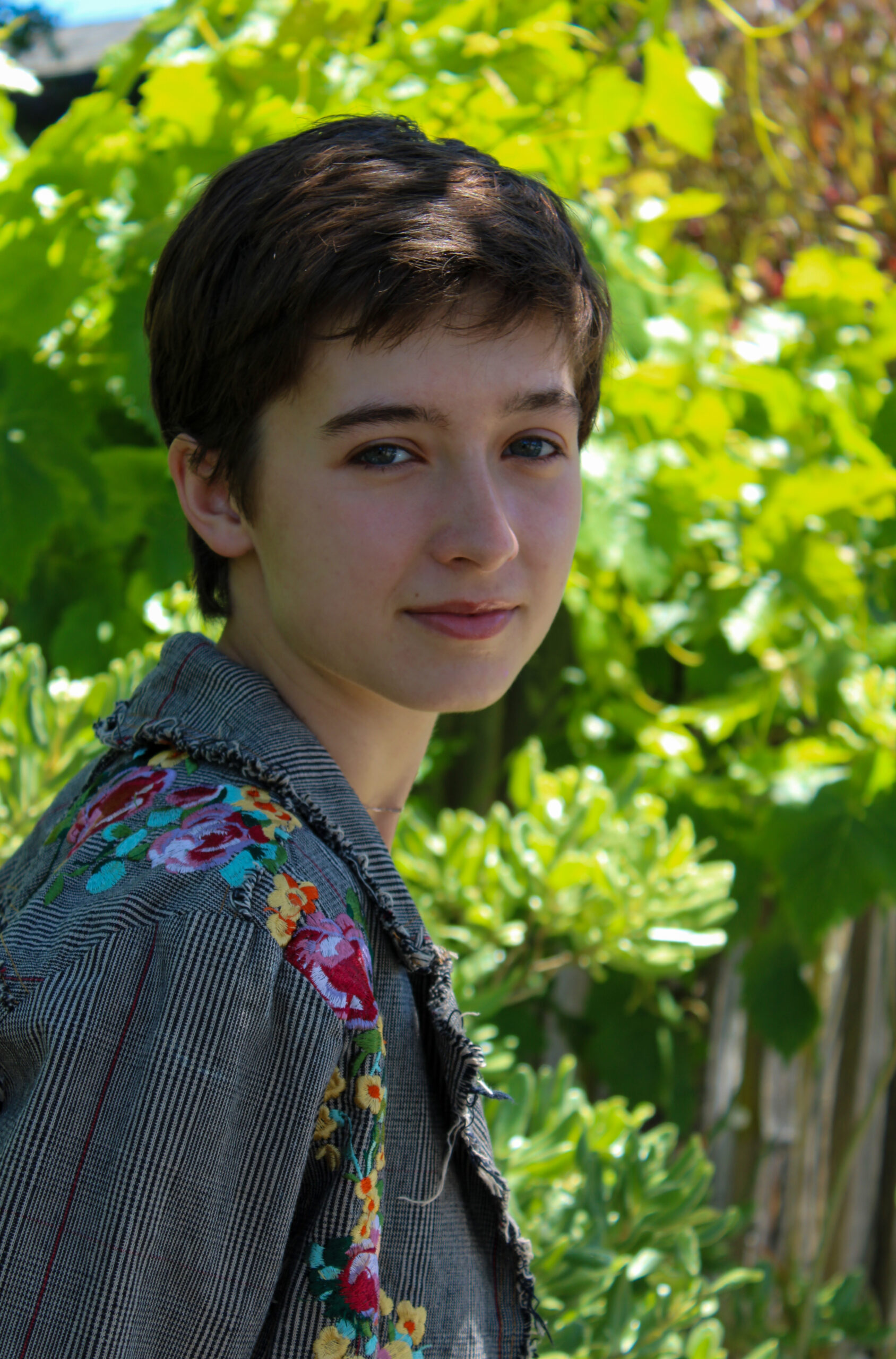 Maren Detlefs (they/them) is a fantasy, sci-fi, and horror writer from Santa Cruz, California. After high school, Maren headed east to pursue a BFA in creative writing at Emerson College in Boston, Massachusetts. Their work has been published in Generic Magazine and the Fruitslice. In 2023, they won a Gold Key Award for novel writing from the Scholastic Art and Writing contest. When they are not writing, you can find them eating sushi and watching the Lord of the Rings with their dachshund, Peanut.