
Act I
The Red Rooster tavern smelled of beer, pipe smoke, and fried onions. Rain rattled against the broad, barred windows. The townsfolk had decided to spend the eve of the ceremony by drinking themselves senseless as early as possible, and the place was packed to bursting.
In a poorly lit corner a student sat like a man waiting for courage. Adrian clasped his mug with both hands and watched the candle flicker and drip. He watched until his thoughts were somewhere else, until he did not notice the chair beside him creak.
“I only meant to draw your attention to your pin,” the man said without looking at Adrian. “Bold to wear it. Bold and undoubtedly foolish.”
Adrian blinked, glanced down, cursed under his breath, and shoved the pin into the pocket of his coat. “Fine. And now? Expecting hush money? Or do you plan to fetch the guards? If that were your intention you would have done it already. So you want something else.”
The man turned. He might have been forty. His hair was slicked back, touched with grey in the firelight. His voice was pleasant in the way practiced politeness can be.
“Clever boy,” he said with a thin smile. “Lucien d’Artois, member of the royal court.” The name sounded like a warning and like an announcement.
“Adrian Valeris,” Adrian replied. “My affiliations are better left unspoken.” Neither man moved to offer a hand.
Lucien leaned closer. “I know why you’re here, and I will not stand in your way. The scroll is still in the palace. The seal is intact. I’ll stand up now, and this conversation never happened. See you at the banquet tomorrow, Adrian Valeris.”
He rose, placed two envelopes on the table, and was gone almost before Adrian could be certain he had been there at all.
The envelopes bore a royal stamp, gilded borders, ink too steady for a common clerk. Invitations to the king’s palace, beyond doubt.
Before Adrian could do more than turn the paper over in his hands, the tavern door burst open as if struck by a battering ram. A man filled the doorway: a red bonnet with an absurdly long pheasant feather, a bright doublet, a black cloak that smelled more of stage than of street, and a perfume so sweet and heavy it pushed through the room.
For a heartbeat everything stopped. The bard’s fingers stilled on the lute. Drinkers held their mugs in midair. Even the seamen ceased their scuffling. Every eye turned.
“How delightful,” the man cried, spreading both arms. “To find such pitiful warmth on a night meant for poets and fools! Gentlefolk, do not lose your manners! The next round is on me!”
He flung a well-filled purse at the innkeeper. The crowd roared in approval and the noise came back, louder than before.
The man threaded through the horde without splashing his cloak with even a drip of beer and vanished up the stairs.
Adrian looked at the two invitations and understood. Two invitations. One for him. One for the man who would attract every eye at the banquet.
A diversion.
Everything snapped into place, and Adrian could have slapped himself for not seeing it sooner.
He rose quietly and followed the man up the stairs into a corridor where the din thinned to a distant murmur.
Act II
The door stuck on its hinges and then gave just enough to let Adrian slip through. He stood in a narrow passage lined with doors and breathed once, slow, until the creak of his boots seemed to belong to the inn.
One door had been left half open. Behind a folding screen of dark wood, shirts and cloaks hung in a variety of colours. Giggling came from within, and beneath that the steady crackle of a fire that made the shadows lean and sway.
Adrian padded past the screen and stopped where the heat of the hearth met the cooler air. The man from the tavern sat in a deep chair by the fire. Two women had made themselves comfortable on thick pelts at his feet. The flames threw their skin into gold. Their clothes were light and careless.
Attempting to remain unseen proved pointless. Three pairs of eyes turned to him as if he had been a coat that had learned to walk.
“My ladies,” the man sighed, “we shall continue our chat later. Off with you.” The women giggled and slipped past Adrian toward the door. When they left, the man poured himself wine as if nothing had happened. Mid-length blond hair was tied at the nape of his neck. A neatly pointed beard framed a face practised in charm. His clothes had known better days.
“Care for a drop?” he asked.
Adrian shook his head.
“Very well. Then sit down on your buttocks.” He tipped his goblet toward a chair across from him.
Adrian took the seat. Hardly had he settled than the man resumed as though he had been interrupted mid-sentence. “So you place yourself in the midst of my evening’s diversion and even refuse the wine. Who are you? A pervert? Part of a travelling circus? Or one of those silent mystics who look as if they have had divine revelations when in truth they only suffer stomach cramps from badly brewed tinctures?”
The tone was rueful rather than unkind.
Adrian opened his mouth, but the man cut him off.
“I jest, boy!” he laughed, loud and theatrical in the sort of way that filled a small room. “Count Christian-Joseph Voulger of Fexraune, at your service.” He inclined his head with the precise amount of bow to avoid looking ridiculous. “Though the king’s court has not been altogether fond of the title of late. A small disagreement with a certain prince over his betrothed. But enough of that. Who are you and what do you want?”
Adrian collected himself and matched the man’s pace as best he could. “Adrian Valeris. University of Eldwich. I need an escort for the banquet tomorrow night.” He pulled out the invitation and laid it in the Count’s hand.
“Charming,” the Count said, nodding slowly. “Only that? A courteous request out of pure nobility?”
Adrian did not hesitate. “I will not lie. The king has sealed the university after the assassination attempt. All the professors and students were detained. I was one of those who fled. He believes we are behind it.”
The Count turned the goblet between his fingers, considering the wine as if the liquid might speak. “And?”
“Two centuries ago the university aided in the reconstruction of Lunathril. For that our immunity was documented. I need that manuscript. It is in the palace archives. A diversion tomorrow would be useful.”
Adrian avoided the Count’s eyes but felt them, sharp as a dagger.
“And what do you get from this?” the Count asked.
“The university,” Adrian said. “It is all I have left. My family died in the war. A professor took me in and taught me everything he knew.” The memory tightened his throat.
The Count leaned back and studied him as an actor studies an audience. “Well then, what a noble aim. Very well. You shall have my help. But I do not work for free.” He leaned forward, the smile sharpening. “I want a story. A true one. No embellishments. No heroics that never happened. An honest tale. My next stage piece opens in a few months and truth sells better than any fiction.”
A true story. Adrian had few to offer, but one had sat at the back of his head that made his neck hair twitch. He nodded.
They shook hands. Adrian, contrary to his usual caution, at last accepted the goblet and drank. The wine was good and the heat from it steadied him. Tomorrow was suddenly nearer and yet very far away.
Act III
Late evening. The lanterns in the street were isles of light. Narrow roads were crowded with townsfolk in their finest attire, lanterns draped with ribbons. Small brigades marched past with banners and songs, and the rain fell as if indifferent to the music.
Adrian worked at the collar of his shirt until he could breathe and unfastened a button of the elegant doublet he had borrowed from the Count. The man owned enough clothes to outfit a whole troupe.
“There will be no turning back, not for you at least. I hope you know that,” Count Christian whispered. They stood before the palace gates and waited.
Adrian nodded and swallowed. At the gate both men offered their invitations. A guard inspected the Count longer than required, then let them through.
The throne room overwhelmed him. Stained glass rose like slow flames, columns stood like trunks in a stone forest, and long tables ran with dishes from every province. Spiced wine and preserved fruit scented the air. In the centre the throne loomed and the king sat upon it, ringed by advisers and intimates. His tired eyes darted from one man in the crowd to another.
Count Christian left Adrian to his astonishment and melted into the crowd of guests he clearly knew. Adrian drifted to the edge and at last found Lucien D’Artois by the statue of a general, a stone man with sword outstretched. Lucien stood so close his fingers brushed the marble.
“So we meet again,” Adrian said.
Lucien did not turn. “Most here celebrate, drink, feast, and take their pleasures with the courtesans. They do not remember the sacrifice of my ancestor. He would never have offered it if he had known what the kingdom would become.”
He touched the statue as if searching for a ridge. Adrian decided not to comment on the man’s remark.
“Why do you do this? Why help me?” he asked quietly.
Lucien remained motionless. “Now is not the time. Sometimes one helps another to remove a piece from the board. And sometimes one does it because the game itself bores you.”
Before Adrian could ask more, the Count began his diversion.
It was anything but accidental. One staged misstep after another: he tripped on his cloak and upended a tray, climbed onto a table, told vulgar anecdotes, tossed exaggerated compliments like confetti, and finally bade a drummer play as though there were no tomorrow. The court ladies giggled and the guards were forced forward. The king buried his face in his hands.
Adrian’s chance was as simple as it was reckless. While every eye was fixed on the ridiculous spectacle, he slipped through a side door, followed a servant, and took a narrow stair into the private chambers.
The inner rooms smelled of leather and old paper. Maps lay folded against boxes of sealing wax and heavy robes hung in cabinets. In a small study on a wooden desk a yellowed parchment waited, its wax seal unbroken. Adrian unrolled it just far enough to see the words: immunity rights for the university. Agreements that could bind the crown. Exactly what he had come for.
He tucked the parchment into his coat and moved back along the corridor, keeping to the shadows. The light from a high window slanted across the stones. Muffled footsteps came from ahead. Adrian peered around the corner and stopped.
The king stood there in a robe embroidered with gold, small and tired. Beside him, Lucien, as if by accident. Two palace guards accompanied them, not the coarse men Adrian had seen earlier but officers who carried themselves with the square-shouldered duty of trained men.
“What is so frightfully important?” the king snapped, voice thin as he tried to hold on to a scrap of authority. “Lucien, you dare-”
He never finished. The guards seized him and held him fast. The crown weighed suddenly like lead.
Adrian took an involuntary step. Lucien’s voice slid out, soft and close: “Enough.”
He drew a dagger and struck between armour and throat, precise as a practiced stroke. The king crumpled and terribly drowned in his own blood. Lucien stepped back, let the blade fall, then summoned the court and the guards with a calm the place had not seen before.
Moments dissolved into hysteria. Alarms, shouting, guards running. Lucien pointed toward Adrian. “The student! He stabbed the king!”
Adrian saw the motion and the look in Lucien’s face. No regret. Only a cold, terrible satisfaction. The truth struck him as if a hand had slapped his face: he had been set up. He had been the scapegoat from the start.
Without thinking he hurled himself through the nearest window. Glass sang as it broke. Pain lanced his arm from the shards. The rain hit his face like a hard greeting as he landed on the wet paving of the palace garden. Behind him a scream rose and commands were shouted.
He ran until the palace lights narrowed to a smudged rectangle and he could slip into a narrow alley. The world outside the gates had become rumour and accusation.
Adrian slid down against a cold house wall and breathed. The seal pressed through his coat against his ribs. He pressed his palm to it just to know the thing inside was still there.
Act IV
He might have dozed if the loud, hurried thud of boots on wet stone had not snapped him awake. Adrian’s heart thudded awkwardly in his ears. He glanced toward the edge of the wall where the house ended and saw a shadow leaning, hand braced on the corner, breathing heavily.
“Bloody hell,” the man muttered, then turned.
Adrian recognized him at once. Relief flooded him despite the circumstances.
The Count. He was out of breath, his cloak gone, the bonnet missing, his shirt wrinkled and a tear in the sleeve.
“Adrian… finally a familiar face,” the Count managed, then paused to snort. His expression shifted into a mix of disbelief and accusation. “Tell me at once what the devil happened back there. Did you find the parchment and decide to bash the king over the skull with a candlestick as well? What has gotten into you?”
Adrian held the scroll aloft as if it were proof of his innocence.
“I have the parchment. But I did not touch the king. It was Lucien D’Artois. He stabbed him. The invitations were his. He meant to pin the blame on the university. It was part of his plan.”
The Count simply sank onto the pavement and rested his head against the damp wall as if he had not paused in years.
“Of course,” he murmured. “That pompous toad. I could not stand him at court even then. Always that smug look, as if he were the only man who’d ever held a book.”
Adrian breathed heavily. Rain ran down his cheeks.
“What happened to you? What went on in there?”
The Count ran a hand through his hair. “Shortly after the king left the hall, the guards suddenly sealed the exits. No shouting, no warning. They moved straight for the nobles closest to the throne. Some they threw to the ground and slit their throats as if they had been practicing for weeks. Then the king’s tournament knights stepped in. Unarmed. With bare hands, so we could get away. Fools, but brave fools.”
He shook his head as if still struggling to comprehend it.
“I slipped out when one of the knights tossed a guard over a table. After that I ran.”
Heavy footsteps sounded in the distance, torchlight and the barking command of a captain.
“Staying here would be foolish,” the Count said curtly. “The tavern. No one there knows you and I know the innkeeper from better days. Come.”
They moved through narrow alleys and side streets, past dripping overhangs and flickering lamps. The tavern was nearly empty. Only a few drunken bards and two unsettled patrons sat lost among the benches. Nobody spoke.
The Count patted Adrian on the shoulder. “Wait here. A minute.”
Though he had no minute to spare, Adrian waited.
No more than two minutes later the Count came down the stairs half falling, laden with a backpack, a rolled blanket, and a lute somehow tucked beneath his arm.
“Go. The horses wait outside,” he said as if it were the most natural thing.
Outside the rain drizzled again, a steady, weary fall.
“What are you planning? Where are you going?” Adrian asked as they headed for the horses.
“I’ll ride with you for a while,” the Count replied, swinging into the saddle. “To the crossroads toward Astoria. There I’ll leave you. The air in the city will be thick for months to come. No theatre to be had here, save on the gallows.”
They rode through the north gate. The guards seemed overwhelmed, running, arguing, shouting, rushing toward the palace. No one checked them. No one stopped them. On such nights anything could happen.
The sky first greyed, then turned pale pink as they reached the crossroads. The wheat in the fields danced in the wind. The road lay quiet.
Adrian dismounted. The Count followed. They embraced, tight and wordless.
“It’s hard to believe I called you a pervert the first time we met,” the Count said with a tired, honest laugh.
“Fair enough,” Adrian replied with a weak grin.
The Count put his foot in the stirrup and swung up, pausing once more. His gaze was exhausted.
“That’s that. Thanks for the story, Adrian Valeris. You’ve got one now that will carry you through life. Whether you killed the king or not will soon matter little. People do not remember truth. Only a good tale.”
Adrian nodded. “Thank you.”
The Count rode off without looking back.
Whether Adrian Valeris managed to save the university I do not know. I never saw him again. What I do know, however, is that my stage piece about the death of the king was a resounding success in the court of Astoria.
About the Author
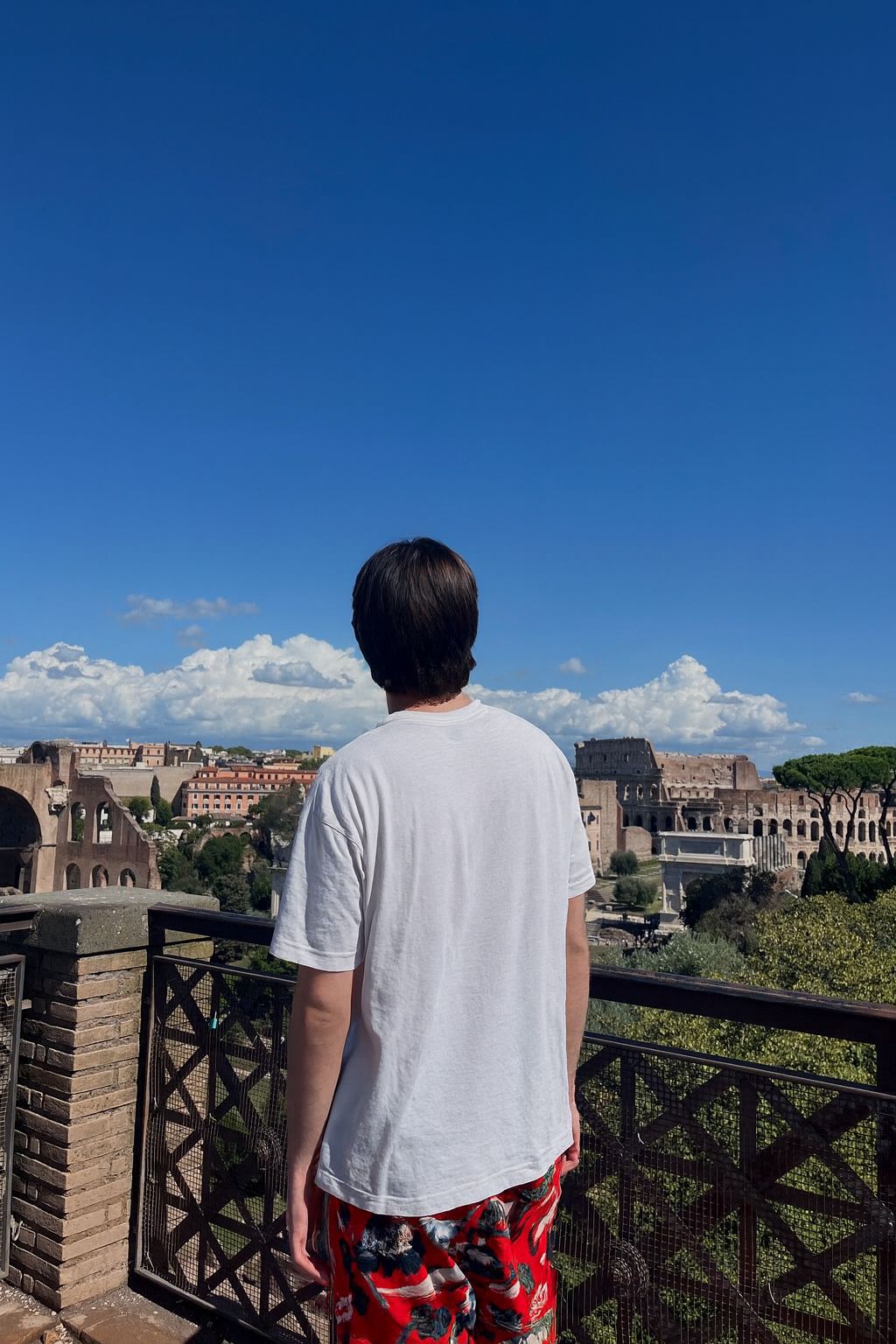 Ember Willow is a 24-year-old Austrian drama student with three years of life in Ireland shaping voice and imagination. He has been writing stories for years, both on the page and on the stage.